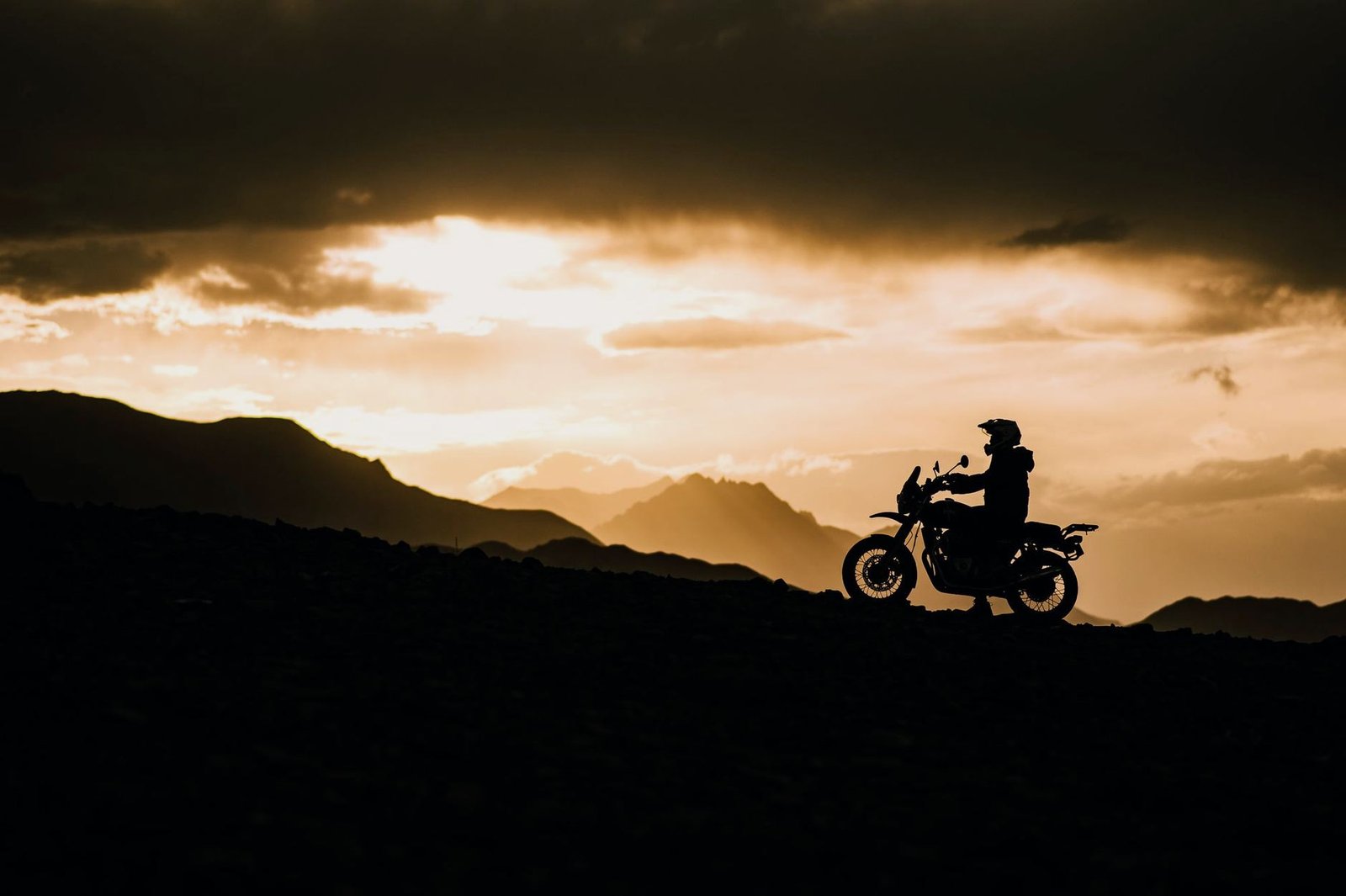
Motorcyclist riding along a ridge at sunset
  1. Home
  2. Motorbike Finance

Motorbike Finance

Road bikes, cruisers, adventure bikes, dirt bikes and scooters, bought new, used or from a private seller. A two-minute enquiry, and no credit check until you choose to proceed.

30+
Lenders on our panel
24hr
Turnaround on your options
No credit check
Until you choose to proceed
"Was with Solvyr recently and had a great experience with Nash. Super friendly and very knowledgeable. Provided options and created plans for everything I had queries about. I will be coming back!"
Verified Google Review
What we finance

Bikes we can finance

A motorbike loan is not a car loan with two fewer wheels. Lenders sort bikes into categories and apply different rules to each, so the machine you pick decides who will look at the application. Most of what people buy sits in the straightforward half of that list.

  • Road bikes
  • LAMS learner-approved bikes
  • Cruisers
  • Adventure and touring bikes
  • Dual sport bikes
  • Dirt and enduro bikes
  • Motocross bikes
  • Supermoto
  • Scooters and mopeds
  • Trikes
  • Riding gear and helmets
Listing to driveway

You do three things. We do the rest.

We work out which lenders suit the bike and your situation, build the application from your documents, and run the ownership and payout checks a private sale needs. You deal with us, not with four different lender call centres.

Get Approved
  1. Pick the bike, or a shortlistYear, make, model and asking price is enough to start. You do not need a signed contract.
  2. Tell us about youA couple of minutes online. No credit check for a quote.
  3. Collect the bikeOnce the loan settles the funds go to the dealer or the seller, and you ride away.
Your situation

What is your situation?

The bike, your licence and whether the loan is personal or for work all change which lenders can help. Pick the closest fit.

First bike or LAMS

Holding a learner or restricted motorcycle licence does not stop you borrowing. Lenders are assessing you as a borrower, not as a rider, so your income, your credit file and your living costs are what matter.

The thing that catches first-time buyers out is price. Plenty of good learner-approved bikes sit under the minimum loan amount a lender will write. If the bike is cheap, financing it together with your gear, or using a lender with a lower floor, is usually the way through.

Upgrading

Coming off restrictions, or finally buying the cruiser you have been circling for years. A bigger, more expensive bike is fine as long as the application supports the amount.

Two things shape the shortlist here. Age is one: some lenders cap how old the bike can be at the end of the loan term, so a much older machine trims the panel. The other is your car loan. A bike is usually a second or third vehicle, and the lender wants to see you can carry both repayments comfortably, not just one.

Dirt or off-road

Registration is the dividing line. A registered trail bike is treated much like any other road bike. An unregistered dirt bike or a competition machine is harder to secure against, because the lender has less to identify and register an interest in, and some lenders will not write them at all.

Options still exist, usually as an unsecured loan or through the smaller group of lenders comfortable with recreational assets. Tell us the bike is unregistered at the start and we go straight to those lenders rather than burning a credit enquiry on one that was never going to say yes.

Business use

Couriers, delivery riders, trades running a bike between sites and anyone using a scooter as a work vehicle can look at commercial finance instead of a consumer loan. That needs an ABN, and most lenders want to see the bike makes sense for the business.

How the loan is treated at tax time is a question for your accountant. We do not give tax advice.

More on low doc options

Structures and options

Secured, unsecured or commercial?

Mostly it comes down to whether the bike can be used as security, and whether the loan is personal or for work.

Option 1Secured consumer loan

Backed byThe bike, registered and in your name

Best forMost road bikes, cruisers and registered adventure bikes

Good to knowThe lender records an interest against the bike until the loan is repaid, and normally requires comprehensive insurance

Option 2Unsecured personal loan

Backed byNothing. Your income and credit history do the work

Best forUnregistered dirt bikes, competition bikes, very old bikes, or gear on its own

Good to knowThe lender holds no security, so it looks harder at your file and the terms are usually tighter

Option 3Commercial loan or chattel mortgage

Backed byThe bike, with an ABN behind the application

Best forCouriers, delivery riders and trades using the bike for work

Good to knowLow doc options exist for established ABNs, and the tax treatment is a question for your accountant

Whichever way it is structured, every application is subject to lender criteria and credit assessment.

Get Approved
Repayment estimator

Work out your repayments

Move the sliders to see roughly what repayments could look like. When you enquire, we compare real lender options for your situation.

Estimated repayment$0per month
Total interest$0Total repaid$0
Get my real options

Indicative estimate only. The rate is an example you choose, not a rate we are offering. Actual repayments vary by credit profile, lender, fees and product type, and this is not a quote or an offer of credit.

The process

How it works, start to finish

1
Step 01

Quick enquiry

About two minutes online. Tell us about you and the bike, including whether it is registered and whether you are buying privately. No credit check happens at this stage.

2
Step 02

We match the lender

We shortlist from a panel of more than thirty banks and specialist lenders, based on the bike, your income type and your credit history, then come back with the option we would choose and why.

3
Step 03

Documents and assessment

You sign a credit consent and send your documents through. Approvals often land within 24 to 48 hours. Every approval is subject to lender criteria and credit assessment.

4
Step 04

Settle and ride

For a private sale we run the ownership and payout checks first. The lender then pays the dealer or the seller directly, and you collect the bike.

Self-employed riders are a big part of who we work with. ABN holders can look at low doc options that do not need full financials, and our self-employed loans page explains how lenders assess irregular income. The same principles apply to bikes.

Found the bike, or still browsing the classifieds? Either way, start your two-minute enquiry and know where you stand before you negotiate.

Why Solvyr Capital

Finance brokering done right.

We work with clients and lenders right across Australia. As a credit representative under AFAS Group's Australian Credit Licence, we're held to strict compliance and professional standards.

Your bank has one answer. The dealership finance desk usually works from a handful of lenders, and a bike dealer's desk is often narrower again. One conversation with us puts the application in front of a panel of more than thirty lenders, banks and specialist non-bank lenders included. We are not tied to one lender's products, so we go where the application fits best.

We move fast

Quick answers and updates at every step. Your time is money and we don't waste it.

Licensed & compliant

CR No. 576829 under AFAS Group ACL 414426. FBAA M-362098. AFCA 121188.

Deals others can't do

Self-employed, adverse credit, new ABN, specialist assets. Our lender relationships are built for it.

Transparent & honest

We work for you, not the lender. Straight about your options, the fees and the best path forward.

The detail

Know before you apply

The longer read, for when you want the full picture. Tap a topic to open it.

How the bike you pick changes the lender

Lenders do not see one category called motorbikes. They see several, and the rules attached to each are different. Working out which one your bike sits in is the first thing we do, because getting it right before anything is submitted is what keeps the process short.

  • Road bikes. Registered and road legal is the easiest category there is. Learner-approved models through to litre bikes, and most of our panel will look at them.
  • Cruisers. A larger, pricier bike is fine as long as the application supports the amount. Badge matters less than age. Several lenders cap how old the bike can be at the end of the loan term, so a much older machine narrows the field rather than ruling finance out.
  • Adventure, touring and dual sport. If it is registered, most lenders treat it like any other road bike. A registered dual sport bike is a road bike as far as a lender is concerned, even if it spends most of its life on gravel.
  • Dirt, enduro and motocross. Registration is the dividing line, and it is the single biggest factor on this page. More on that below.
  • Scooters and mopeds. Simple assets, but often cheap enough to fall under a lender's minimum loan amount, which becomes the real obstacle.

First bike or fifth, the approach is the same. New riders get matched to lenders comfortable with a first-time borrower. Riders trading up get matched to lenders happy with bigger, older or more specialised machines.

Registration, security and unregistered bikes

A secured loan needs an asset the lender can identify and register an interest against on the Personal Property Securities Register. A registered road bike has a VIN, an engine number and a compliance plate, so that is straightforward.

Unregistered and recreation-only bikes. Here it gets harder. The lender has less to tie the security to, the bike is easier to move or part out, and resale values on used dirt bikes are less predictable. Some lenders simply will not write them. Others will, and knowing which is which is most of the value we add. Recreational registration, where it is available, helps, because it gives the bike an identity on paper.

Competition bikes. A pure motocross or race machine usually has no compliance plate and can never be registered for the road. Treat it as an unsecured purchase and plan around that. It is not impossible to finance, it is just a smaller panel and tighter terms.

What that means in practice. When a bike cannot be used as security, the loan is normally unsecured. The lender is carrying more risk, so it looks harder at your income, your credit file and your living costs, and the amount and term on offer are usually smaller. That is the honest trade-off, and it is better to know it before you make an offer than after.

Buying from a dealer, or from a private seller

Dealer stock. The simple path. The lender gets a tax invoice, the dealer handles the transfer and delivery, and settlement moves quickly. Used bikes through a dealer are nearly as easy, with the age limits above the only thing to watch.

Private sales. This is where a broker earns their keep, because the lender has to be satisfied the bike is genuinely the seller's to sell. Before settlement there is a search on the securities register to confirm no money is owing, a check of the seller's identity and ownership, and, if the seller still has a loan on the bike, a direct payout so the debt does not follow you home. Bikes change hands often and informally, so a bike with finance still attached is not rare. We run those checks as part of the process.

Two things to plan for on a private sale. The money goes to the seller's bank account at settlement, not to you, so cash deals and handshake deposits do not work. And in most cases a lender will not reimburse you for a bike you have already bought and paid for, so talk to us before you hand anything over. Depending on where the bike is, you may also need a roadworthy or safety inspection before it can be transferred, and if the bike is a long way from you, factor in transport.

What lenders actually look at

Most motorbike loans are assessed like any other consumer loan. Five things decide the answer, and none of them are about how well you ride.

  • Your job and how long you have been in it. Lenders set a minimum time in your current role, and some will not lend while you are on probation. Casual and contract workers usually need a longer track record.
  • Your credit file. Defaults, missed payments and a run of recent enquiries all count. A blemish is not automatically the end of it, but it changes which lenders we approach, which is why we would rather know early. An honest conversation costs nothing. A declined application sits on your file.
  • What you spend. Lenders read your bank statements against your stated living costs. Every account matters, which is why we ask for ninety days across all of them.
  • Your existing commitments. A bike is usually a second or third vehicle, so your car loan, credit card limits and buy now pay later accounts all reduce what is left. Card limits count even when the card sits unused.
  • The size of the loan. Most lenders on our panel set a minimum loan amount. $5,000 is the most common floor, several lenders start at $8,000 or $10,000, and only a few go lower. That is a real constraint on cheaper bikes. Financing the bike and the gear together, or using a lender with a lower minimum, is usually how that is solved.

If the numbers are tight there are normally options: a slightly longer term, a deposit or a trade-in, or waiting a few months until a credit enquiry ages. We will tell you what is realistic before any credit check happens, and if the deal is not there we will say so.

Gear, on-road costs and insurance

Gear. Some lenders will let you build a helmet, jacket, boots, gloves and armour into the loan. Others will only fund the bike. It is easiest when the gear is on the same invoice from the same dealer, so raise it early and we will factor it into the shortlist rather than going back to the lender later.

On-road costs. Registration, the transfer fee, stamp duty and compulsory third party cover are all real money on top of the sticker price. A few lenders allow them inside the loan, most do not, and it varies with the bike. Budget for them either way.

Insurance. Comprehensive insurance is normally a condition of a secured loan, with the lender noted on the policy, so it is not optional. Worth knowing before you commit: motorbike premiums move a long way with the rider's age and the type of bike. A young rider on a sports bike can pay several times what an older rider on a cruiser pays, and that cost sits alongside the repayment, not inside it. Get a quote on the actual bike before you sign anything.

Modifications. Heavily modified bikes can be valued below what you paid, because a lender values the machine, not the money spent on it. Aftermarket exhausts, suspension and bodywork rarely add to the valuation and can occasionally count against it.

Documents to have ready

Have these ready once we come back with your options. We fill in your income, expenses and debts from them, so there is far less for you to type.

  • Driver licence. A photo of the front and the back. Tell us your motorcycle class or learner permit as well.
  • Your two most recent payslips. Or your latest tax return or BAS if you are self-employed.
  • Ninety days of bank statements. For every account you hold, including savings and credit cards.
  • The bike details. Year, make, model, odometer reading, asking price and the VIN or engine number if you have it.
  • The seller's details. For a private sale, so we can run the ownership and payout checks.

Upload everything in one go if you can. Applications stall on missing documents far more often than they stall on credit.

Good to know

FAQs

Rather talk it through?

Tell us about the bike and get a straight answer on your options. The enquiry does not affect your credit score.

Get Approved
or call 0468 157 797
Can you finance a dirt bike that isn't registered?

Often, yes, though the lender pool is smaller. Recreation-only bikes are treated differently to registered road bikes because there is less for the lender to secure against, and some lenders will not touch them. Others will, usually as an unsecured loan, and part of our job is knowing which is which. Tell us the bike is unregistered upfront and we will go straight to the right lenders. All approvals are subject to lender criteria and credit assessment.

Does applying for motorbike finance hurt my credit score?

The initial enquiry with us takes about two minutes and does not affect your credit score. No credit check happens until you have seen your options and signed a credit consent. A formal application with a lender is then recorded on your credit file, which is why we assess your situation honestly first and aim to approach only the lender most likely to approve you.

Can I get a loan for a motorbike bought from a private seller?

Yes, many lenders on our panel finance private sales. There are extra checks: a search on the securities register to confirm no money is owing on the bike, and verification that the seller actually owns it. If the seller still has a loan on the bike, the lender pays it out directly at settlement. The funds go to the seller's account rather than to you, so talk to us before you pay a deposit. We handle those steps for you.

Can I include gear and on-road costs in a motorbike loan?

Sometimes. Certain lenders will let you build riding gear, registration and other on-road costs into the loan, while others will only finance the bike itself. It is easiest when the gear is on the same invoice as the bike. Mention it early and we will factor it into which lenders we approach.

How fast can motorbike finance be approved?

Once your documents are in, approvals often land within 24 to 48 hours. Every approval is subject to lender criteria and credit assessment, so nothing is certain, but delays almost always come down to missing paperwork. Private sales can take a little longer because of the ownership and payout checks.

Can I finance a motorbike on a learner licence?

Yes. Lenders assess you as a borrower, not as a rider, so your income, credit history and living costs are what matter rather than your licence class. The more common obstacle for a first bike is price, because most lenders set a minimum loan amount.

Is there a minimum amount for a motorbike loan?

Most lenders on our panel set a minimum loan amount. $5,000 is the most common floor, several lenders start at $8,000 or $10,000, and only a few go lower. That matters more for bikes than for cars, because plenty of good used bikes sit below it. Financing the bike together with your riding gear, or using a lender with a lower minimum, is usually the way around it.

Do I need comprehensive insurance on a financed bike?

For a secured loan, almost always. The lender holds an interest in the bike and will want it insured, with the lender noted on the policy. Get a quote on the actual bike before you commit, because motorbike premiums vary a lot with the rider's age and the type of bike, and that cost sits on top of your repayment.

Can I finance a motorbike through my business?

Yes, if you have an ABN and the bike is genuinely used for work, such as courier, delivery or trade use. That opens up commercial products including low doc options for established ABNs. How the loan is treated at tax time is a question for your accountant, as we do not give tax advice.
Keep exploring

Related finance

All services and the loan calculator on our main site.

Motorbike finance. Solved.

Tell us about the bike. It takes about two minutes and does not affect your credit score.

Prefer to talk? Call 0468 157 797

Get Approved